Claude Mythos 5 & Project Glasswing: Inside the Cybersecurity Frontier

Inside Claude Mythos 5 & Project Glasswing: The Cybersecurity Frontier
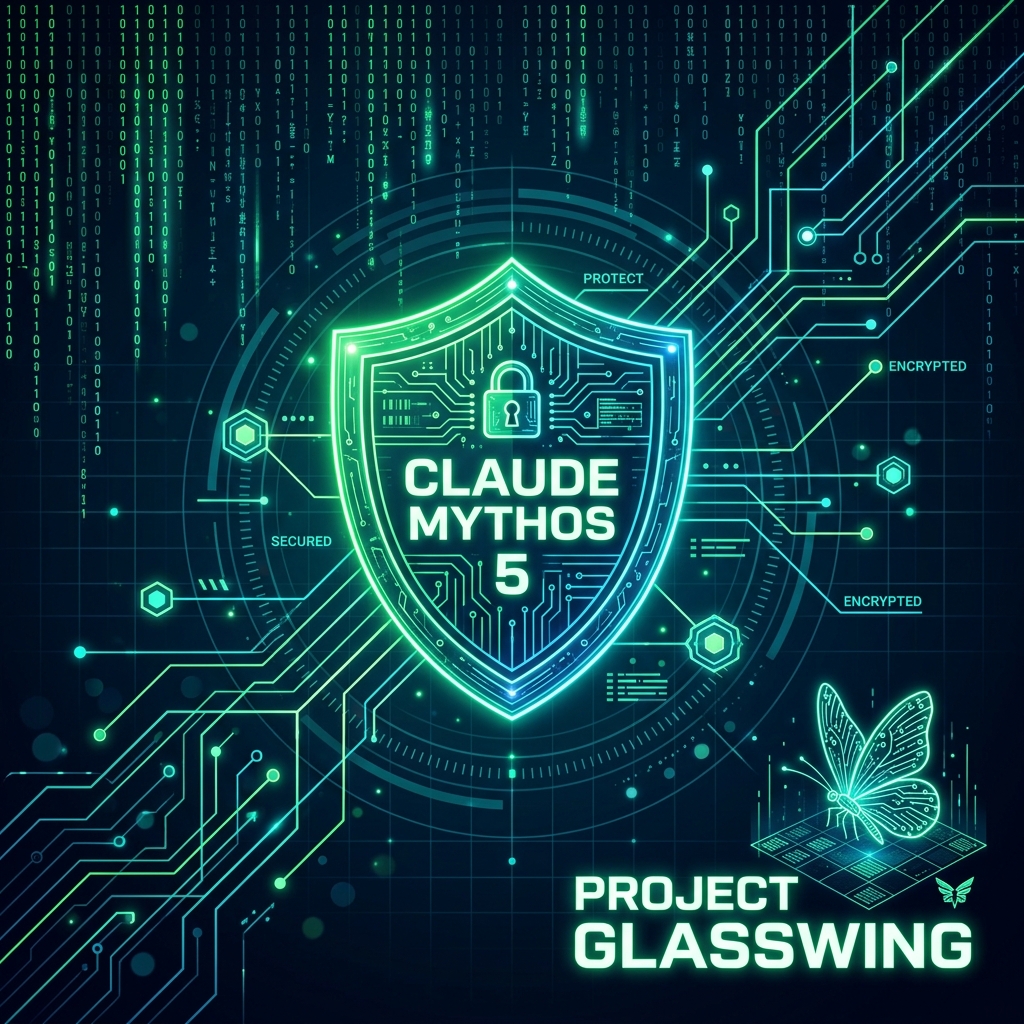
Claude Mythos 5 has been quietly deployed by Anthropic alongside Fable 5, as a highly specialized, unconstrained frontier model designed for high-stakes cybersecurity.
While Fable 5 serves the general developer market with strict safety guardrails, Mythos 5 is the central engine of Project Glasswing, an elite collaborative security initiative aiming to safeguard the world’s most critical digital infrastructure.
Here, we explore the mechanics of Claude Mythos 5, how Project Glasswing operates, and what this means for the future of automated cyber defense.
Claude Mythos 5 vs Fable 5: Key Differences
To understand Mythos 5, one must understand the trade-offs of safety tuning in LLMs.
When a standard AI model is trained to be safe, it is aligned with classifiers that prevent it from generating potentially harmful content. However, these same guardrails prevent the model from analyzing real malware, identifying zero-day exploits, or simulating cyber-attacks for defensive testing.
Anthropic solved this by splitting their 5-series release into two distinct models:
| Dimension | Claude Fable 5 | Claude Mythos 5 |
|---|---|---|
| Target Audience | General Developers & Enterprise Users | Approved Security Researchers & Government Agencies |
| Availability | Generally Available (API, Cloud Platforms) | Restricted (Access via Project Glasswing) |
| Cybersecurity Safety Classifiers | Active (Blocked prompts redirect to Opus 4.8) | Deactivated / Special-Use Rules |
| Primary Use Cases | Coding, Data Analysis, Content Creation | Autonomous Vulnerability Scanning, Patch Generation |
What is Project Glasswing?
Project Glasswing is Anthropic’s controlled deployment initiative for Claude Mythos 5. Rather than releasing an unconstrained cybersecurity model to the public (which could easily be weaponized by bad actors), Anthropic provides access only to verified defenders.
1. Collaborative Infrastructure Scanning
Project Glasswing partners—comprising major tech platforms, cloud providers, and defense contractors—use Mythos 5 to autonomously analyze proprietary codebases. The model scans for:
* High-severity zero-day exploits.
* Memory leaks and buffer overflow vulnerabilities.
* Cryptographic weaknesses in production firmware.
2. Rapid Expansion in 2026
What began in 2025 as a restricted preview with 50 core partners (including Microsoft, Google Cloud, AWS, Cisco, and Apple) has expanded dramatically. As of June 2026, Project Glasswing includes over 200 organizations across 15+ countries, reflecting the urgent need for automated defenses against rising nation-state cyber threats.
3. The Power of Autonomous Patching
Mythos 5 doesn’t just find bugs; it fixes them. Once the model identifies a vulnerability in a software repository, it uses its long-horizon planning capabilities to:
1. Isolate the vulnerability.
2. Write a secure patch.
3. Compile the software and run existing integration tests.
4. Write new unit tests targeted specifically at the patched vulnerability.
5. Submit a Pull Request with complete verification reports.
The Safety Fallback: Fable 5’s Routing Mechanism
For users using the standard Claude Fable 5 API, attempting to perform cybersecurity research will trigger the system’s safety fallback framework.
[User Input: "Analyze this decompiled binary for buffer overflows"]
                         │
                         ▼
             [Fable 5 Safety Classifier]
                         │
        ┌────────────────┴────────────────┐
        ▼ (Safe)                          ▼ (Sensitive / Cybersecurity)
  [Execute Fable 5]              [Route to Claude Opus 4.8]
        │                                 │
        ▼                                 ▼
[Deliver Fable 5 Output]        [Deliver Opus 4.8 Output with Warning]
When a user’s prompt is routed back to Claude Opus 4.8, the output is accompanied by a notification informing the user that the request was redirected. This fallback architecture allows Anthropic to maintain a high-capability floor for enterprise users without exposing unconstrained agents to unauthorized exploitation.
Geopolitical Implications of Restricted Models
The decision to strictly gate Mythos 5 highlights a growing geopolitical divide in AI development. While Western companies like Anthropic, Google, and OpenAI implement strict gating mechanisms (such as Project Glasswing), many international competitors are adopting open-weights distribution.
This tension—where restricted models compete with easily downloadable, uncensored open-weights models from other nations—will be the focus of our next analysis, where we compare Claude Fable 5 with OpenAI’s latest releases and the booming Chinese open-weights ecosystem.
Frequently Asked Questions (FAQ)
What is Claude Mythos 5?
Claude Mythos 5 is Anthropic’s unconstrained frontier AI model. Unlike Claude Fable 5, it does not have safety classifiers enabled for sensitive cybersecurity or computational tasks, allowing it to perform autonomous security vulnerability analysis and patching.
Who can access Claude Mythos 5?
Access is restricted to authorized cybersecurity defenders, infrastructure providers, and research organizations participating in Project Glasswing. It is not generally available to the public.
What is Project Glasswing?
Project Glasswing is a collaborative cyber defense initiative run by Anthropic. It allows participating organizations (expanded to over 200 globally in June 2026) to utilize Mythos 5 to secure critical software and digital infrastructure.
Does Fable 5 replace Mythos 5 for developers?
For 99% of development and commercial tasks, Claude Fable 5 provides the same core capabilities as Mythos 5. Fable 5 is the public version, whereas Mythos 5 is strictly gated for cybersecurity use.
Recommended Reading: For a broader comparison of how Fable 5 stacks up against other frontier models, read our analysis: The 2026 AI War: Claude Fable 5 vs. OpenAI GPT-5.5 vs. Alibaba Qwen 3.



[…] the launch of Claude Fable 5 and its restricted counterpart Claude Mythos 5, Anthropic has introduced a sophisticated, tiered defense system designed to prevent […]