
In a surprising amendment to its highly anticipated S-1 filing, SpaceX has warned investors that the global artificial intelligence boom faces a major structural threat. The updated prospectus highlights a critical SpaceX IPO AI risk: growing regional water scarcity. This environmental crisis threatens to choke the expansion of massive AI data centers worldwide, impacting technology partners and infrastructure developers alike.
The SpaceX S-1 Amendment: A Wake-Up Call
The amended IPO filing has sent shockwaves through both Silicon Valley and Wall Street. SpaceX notes that its own satellite assembly and testing facilities, along with the broader tech sector, rely heavily on stable power and cooling grids. The document names the SpaceX IPO AI risk as a key factor that could disrupt supply chains, space missions, and computational partnerships. Evaluating the SpaceX IPO AI risk is now a major focal point for institutional portfolio managers.
For businesses analyzing complex operational risks, our consulting experts at CodeSecAI custom software services specialize in audit automation and systems engineering. This recent S-1 disclosure highlights the importance of evaluating secondary dependencies in technical infrastructure. The SpaceX IPO AI risk is a prime example of how resource scarcity can impact tech valuations and operations. Mitigating the SpaceX IPO AI risk requires an immediate architectural pivot.
Why Data Centers Demand Millions of Gallons of Water
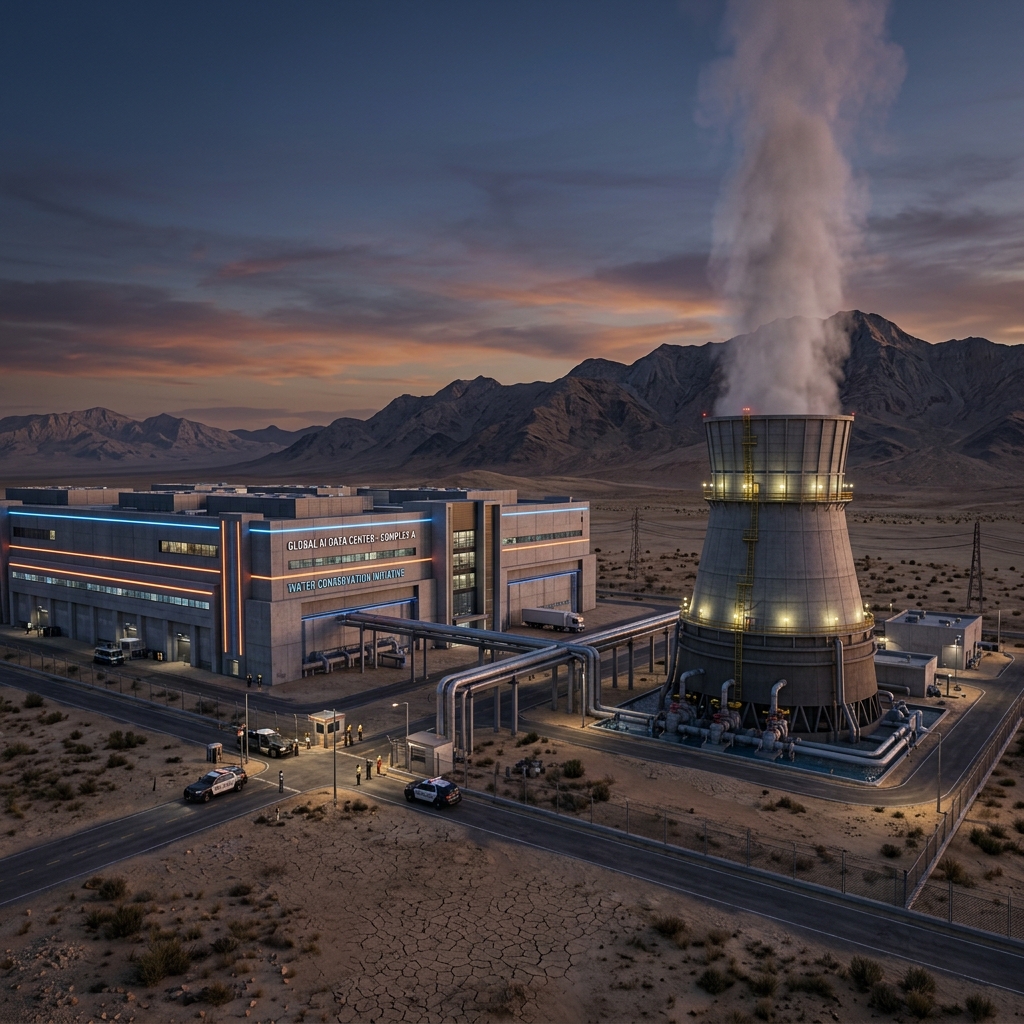
Modern generative AI models require dense GPU clusters that generate immense heat during training and inference. To maintain efficiency, these facilities rely on liquid cooling and evaporative systems. Consequently, data center cooling draws millions of gallons of fresh water daily from local watersheds, creating tension with local communities. This cooling crisis is directly linked to the broader SpaceX IPO AI risk profile.
Evaporative cooling is the most common method used today because of its thermal efficiency and lower energy footprint. However, it requires a continuous supply of fresh water to replace what is lost to the atmosphere. As climate change accelerates, local authorities are restricting these permits, forcing data center operators to reconsider their designs. To understand national water regulations and guidelines, you can read the reports on the US Environmental Protection Agency Site.
Key Infrastructure Constraints Detailed in the Filing
- Evaporative Losses: Traditional cooling towers lose vast amounts of water to evaporation.
- Grid Instability: Droughts limit hydroelectric output, raising energy costs for AI workloads.
- Regulatory Friction: Local governments are restricting water permits for new tech developments.
- Geographic Concentration: Many data centers reside in arid regions where water supplies are strained.
Water Scarcity: The Ultimate Bottleneck for AI Infrastructure
As tech giants race to deploy larger models, the demand for resource-heavy AI infrastructure continues to surge. However, developers are hitting a physical wall. Without sustainable data center cooling solutions, municipal authorities are refusing to greenlight new compute hubs, amplifying the SpaceX IPO AI risk and delaying product launches. These regulatory hurdles are forcing AI labs to look elsewhere.
This environmental bottleneck is already reshaping the geographic distribution of server farms. Companies are now looking at colder northern regions, such as Scandinavia or Iceland, where ambient air can be used for cooling. However, moving this AI infrastructure requires massive capital and creates latency challenges for real-time applications. The risk factors mentioned in the filing show that no company, including SpaceX, is insulated from these resource challenges. The SpaceX IPO AI risk will likely impact public cloud valuations for the next decade.
Geopolitical and Climate Realities in 2026
Environmental policies are tightening across North America and Europe. Tech firms must now submit detailed water-use plans before breaking ground. This regulatory shift makes water scarcity a boardroom-level risk rather than a simple corporate social responsibility concern. Organizations must adapt or face severe delays in scaling their AI platforms.
At CodeSecAI, we emphasize building robust, future-proof systems. The SpaceX IPO AI risk illustrates the need for companies to diversify their compute providers. By spreading workloads across multiple green data centers, enterprises can protect themselves against localized water shortages and power grid failures.
Solving the Data Center Cooling Crisis
To mitigate the SpaceX IPO AI risk, companies are investing in closed-loop liquid cooling and direct-to-chip cooling systems. These technologies eliminate evaporative loss by recycling fluid. However, retrofitting existing AI infrastructure is an expensive and time-consuming process that requires specialized engineering.
Another alternative is dielectric immersion cooling, where server blades are submerged in a non-conductive fluid that absorbs heat. While highly effective, it requires custom hardware and is difficult to maintain. For more details on SpaceX’s aerospace and digital operations, visit the SpaceX Official Site.
AI Infrastructure Risk Assessment Checklist
- Water Usage Effectiveness (WUE): Audit your cloud provider’s water consumption metrics.
- Geographic Diversity: Avoid hosting compute-heavy training runs in high-drought zones.
- Cooling Technology: Prioritize providers using closed-loop or dielectric immersion cooling.
- Contractual Guarantees: Review SLAs for clauses regarding utility disruptions and resource rationing.
Frequently Asked Questions
Why did SpaceX mention AI water risks in their IPO?
SpaceX depends on robust satellite networks and terrestrial compute partners, making them vulnerable to SpaceX IPO AI risk disruptions caused by local utility shortages.
What is the alternative to water cooling for AI chips?
Dielectric liquid immersion and closed-loop radiator cooling are the leading alternatives that reduce the need for a constant fresh water supply.
How does water scarcity affect AI training schedules?
If local municipalities ration water during droughts, data centers may be forced to run at reduced capacity, delaying AI training cycles.